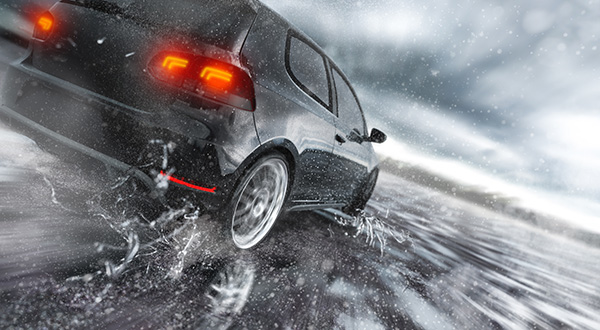
Rain changes the way a car feels in a hurry. A turn that felt normal yesterday can suddenly feel light. A stop that should have been simple can take more room than expected. The vehicle may not seem out of control at first, but the tires are already working harder to stay connected to the road.
Wet-road traction depends on tire condition, tread depth, tire age, pressure, alignment, speed, and road surface. When one of those pieces is off, the tire has less ability to move water away and hold the pavement. That is why tire condition plays such a large role in rainy-day braking, steering, and crash prevention.
Tires Need Tread To Push Water Away
Tread is not only there for appearance. The grooves in the tire are designed to channel water away from the contact patch, which is the small area where the tire touches the road. When tread is deep enough, the tire has a better chance of reaching the pavement through the water.
As tread wears down, the tire loses that ability. Water stays trapped between the tire and the road longer, especially during heavy rain or at higher speeds. The vehicle may still feel fine on dry pavement, but wet braking distance can increase significantly.
A tire can be legal and still perform poorly in rain. Waiting until the tread is completely worn out is not a smart wet-weather plan. By the time the tire looks clearly bald, grip has already been reduced for quite a while.
Hydroplaning Happens When Water Wins
Hydroplaning occurs when a tire rides on top of water instead of cutting through it. During hydroplaning, steering and braking become much less effective because the tire is no longer making solid contact with the road.
Speed is a major factor. The faster the tire hits standing water, the harder it is for the tread to clear that water. Worn tread, low tire pressure, wide puddles, and rutted roads all increase the risk.
Hydroplaning does not always feel like a wild slide. Sometimes the steering suddenly feels light, the engine revs without the same pull, or the vehicle drifts slightly. That brief loss of control is enough to create a dangerous moment on the road.
Old Tires Can Lose Grip Even With Tread Left
Tread depth is important, but tire age should not be ignored. Rubber changes as it gets older. Heat, sunlight, road chemicals, oxygen, and time can make tire rubber harder and less flexible. Harder rubber has a tougher time gripping wet pavement.
That means an older tire with visible tread may still stop poorly in rain. Cracks in the sidewall, small splits between tread blocks, faded rubber, or a dry, stiff feel can all point toward aging. Tires that sit outside or spend years on vehicles driven short distances can age before they wear out.
A tire’s date code can help show how old it is. During a tire inspection, age should be reviewed along with tread depth, wear pattern, pressure, and damage.
Incorrect Tire Pressure Reduces The Contact Patch
Tire pressure affects how the tire meets the road. If pressure is too low, the tire can flex too much, run hotter, wear unevenly, and clear water less effectively. If pressure is too high, the center of the tread can carry more load than it should, reducing usable grip.
Both conditions can hurt wet traction. Low pressure can also increase hydroplaning risk because the tire shape changes under load. Overinflation can reduce the amount of tread working against the road.
Pressure should be checked when the tires are cold, using the vehicle’s recommended pressure. The number on the tire sidewall is not the normal driving recommendation. It is the maximum pressure for that tire.
Uneven Tire Wear Makes Rain Driving Less Predictable
A tire does not have to be worn evenly to be unsafe in rain. One edge may be low while the rest looks acceptable. Cupped tread, feathered edges, shoulder wear, center wear, or bald spots can all reduce traction.
Uneven wear can come from alignment problems, worn suspension parts, poor rotation habits, incorrect pressure, or damaged components. The vehicle may still drive straight, but the tires may not be making consistent contact with the road.
That is why regular maintenance should include tire rotation, pressure checks, alignment checks when wear patterns appear, and suspension review when the tread is wearing strangely. Tires tell a story if someone looks closely enough.
Road Surface Can Make Grip Worse
Rain does not fall on a perfectly clean surface. Oil, dust, rubber residue, pollen, leaves, and road grime can mix with water, making pavement slick, especially when rain first starts. Intersections, curves, shaded roads, and low spots can be worse because vehicles brake, turn, and collect water there.
Standing water is another problem. Even good tires can struggle if the water is deep enough or the vehicle is moving too fast. Worn tires make that problem worse because they cannot clear water as efficiently.
The first few minutes of rain can be especially slick. Drivers often expect the same grip they had on dry pavement, but the road has changed before their habits do.
Braking Distance Increases Faster Than Drivers Expect
Wet roads reduce friction, so stopping takes longer. Worn tires make that distance even longer. The danger is that drivers do not always feel the reduced grip until they need to stop quickly.
Anti-lock brakes can help prevent wheel lockup, but they do not create grip that the tires do not have. Stability control and traction control can help manage a slide, but they still depend on the tire’s ability to hold the road.
Good tires give those safety systems something to work with. Poor tires make every emergency maneuver harder, whether the vehicle has advanced electronics or not.
Get Tire Inspection And Wet Weather Tire Service In Evans, GA, With Marc Yount's Tire Pros
If your tires are worn, aging, unevenly worn, losing grip, or making wet roads feel less secure, Marc Yount's Tire Pros in Evans, GA, can check tread depth, pressure, tire age, alignment wear, and overall tire condition.
For tire service that helps keep your vehicle safer in rainy conditions, contact us to schedule an appointment.